


If you’re searching for Benito Juárez Park, you may already have run into the usual problem. The name refers to several different public spaces, and search results often blur them together. This guide is only about the San Miguel de Allende park, not the monument in New York, not the plaza in Cozumel, and not the municipal parks in California. That distinction matters because a leafy neighborhood park in San Miguel supports a very different daily life than a ferry-adjacent plaza or a civic monument, as noted in the New York City Parks monument listing.
Those seeking information are often trying to answer a practical question, not a trivia question. They want to know what life feels like near the park. They’re picturing a morning walk before breakfast, a shady bench in the afternoon, a dog route that doesn’t require a car, or a home where greenery softens the edges of city life.
That’s where Benito Juárez Park in San Miguel becomes more than a point on a map. On a good morning, the paths fill slowly, the light comes through the trees in broken patches, the gazebo anchors the center of the scene, and the city feels calm without feeling sleepy. In a town where walkability shapes everything, that kind of green space changes how a neighborhood lives.
Table of Contents
- The Green Oasis of San Miguel de Allende
- From Huerta to Urban Heartbeat The Park’s History
- A Visitor’s Guide to Parque Juárez Attractions
- The Park’s Social Calendar Community Events and Culture
- Living Beside the Green The Lifestyle of Nearby Neighborhoods
- How Park Proximity Affects San Miguel Real Estate Values
- Finding Your Home Near San Miguel’s Green Heart
The Green Oasis of San Miguel de Allende
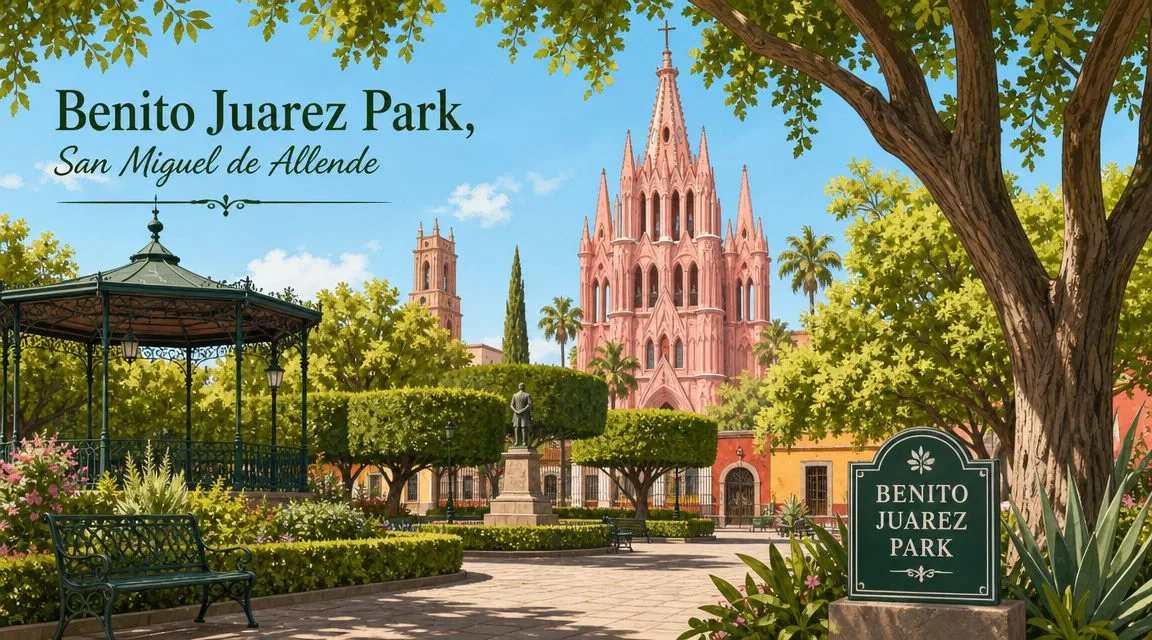
A first visit to Benito Juárez Park usually resets people’s understanding of San Miguel. They expect beauty from the historic center. What they don’t always expect is this softer side of the city, where mature trees, curving walkways, and neighborhood routines matter as much as architecture.
Early in the day, you see who uses the park. Residents with dogs. Couples out before the streets get busier. Parents with small children. Friends stopping to chat without planning to. That mix tells you something important. This isn’t ornamental green space placed there to look good in photos. It works because people fold it into ordinary life.
What makes this park different
Many visitors arrive assuming all central green spaces serve the same role. They don’t. Some parks are transit spaces. Some are event spaces. Some are mainly tourist pauses. This one functions as a daily-use neighborhood anchor.
A few practical observations matter more than brochure language:
- Shade changes behavior. In San Miguel, people linger where the tree cover is real, not symbolic.
- Curved paths slow the pace. You don’t cut through this park the way you cut across a square.
- Edges matter. The homes and quiet streets around the park shape the feeling as much as the interior does.
Practical rule: If a park is busy only when visitors arrive, it’s an attraction. If it has a rhythm before and after the visitors, it’s part of the city’s real life.
Why buyers keep coming back to it
The park appeals to people who want access to Centro without living in the middle of its constant movement. That’s a narrow sweet spot, and San Miguel doesn’t have many places that deliver it so gracefully. A morning coffee tastes different when your walk begins under trees instead of along hard pavement.
For buyers considering a relocation, this is often the moment the city becomes legible. They can see how a home near the park would function on a Tuesday, not just on a holiday weekend. That’s the test that matters.
From Huerta to Urban Heartbeat The Park’s History
San Miguel has a habit of layering uses over time. What feels settled today often began as something more private, more utilitarian, more tied to an earlier pattern of life. Benito Juárez Park is best understood that way. Locally, people have long associated the area with its huerta past, which is why the park doesn’t feel imposed on the neighborhood. It feels inherited from it.
That matters in practical terms. Parks that grow out of older land patterns often sit more naturally within their surroundings. The paths make sense. The green space doesn’t feel detached from the homes around it. The neighborhood reads as though it formed with the park, not around a leftover parcel.
Why the name matters
The second part of the story is national, not local. Benito Juárez (1806 to 1872) was a defining Mexican president who led resistance against foreign occupation and helped establish a democratic federal republic, according to Britannica’s biography of Benito Juárez. His inscription, “Respect for the rights of others is peace,” appears on monuments beyond Mexico, including Bryant Park in New York City.
That broader legacy gives the park’s name real weight. In Mexico, Juárez isn’t a decorative historical figure. He represents reform, constitutional order, civic rights, and national endurance. When a park carries his name, residents read more into it than simple commemoration.
How local history changes the experience
Understanding the huerta origin changes how you move through the park. It explains why the space feels gentler than a formal plaza and less rigid than a typical civic square. You sense a garden logic in it, even when you’re not naming it.
For people evaluating where to live, that historical layer matters in three ways:
- It softens density. Historic neighborhoods can feel tightly built. Former garden land creates breathing room.
- It adds permanence. Spaces with a long civic identity tend to hold their place in the neighborhood imagination.
- It supports prestige without stiffness. The park feels established, but not ceremonial.
A park with history behind it usually ages better than a park that was added only to satisfy a plan on paper.
This is one reason homes nearby carry such emotional pull. Buyers aren’t responding only to landscaping. They’re responding to continuity. In San Miguel, continuity is often what separates a pleasant property from one that feels rooted.
A Visitor’s Guide to Parque Juárez Attractions
A useful visit to Parque Juárez starts with pace. Don’t treat it like a checklist stop. Walk it once without an agenda, then a second time noticing where people gather, where children play, and where the quieter corners sit. The park rewards repeat use more than quick consumption.
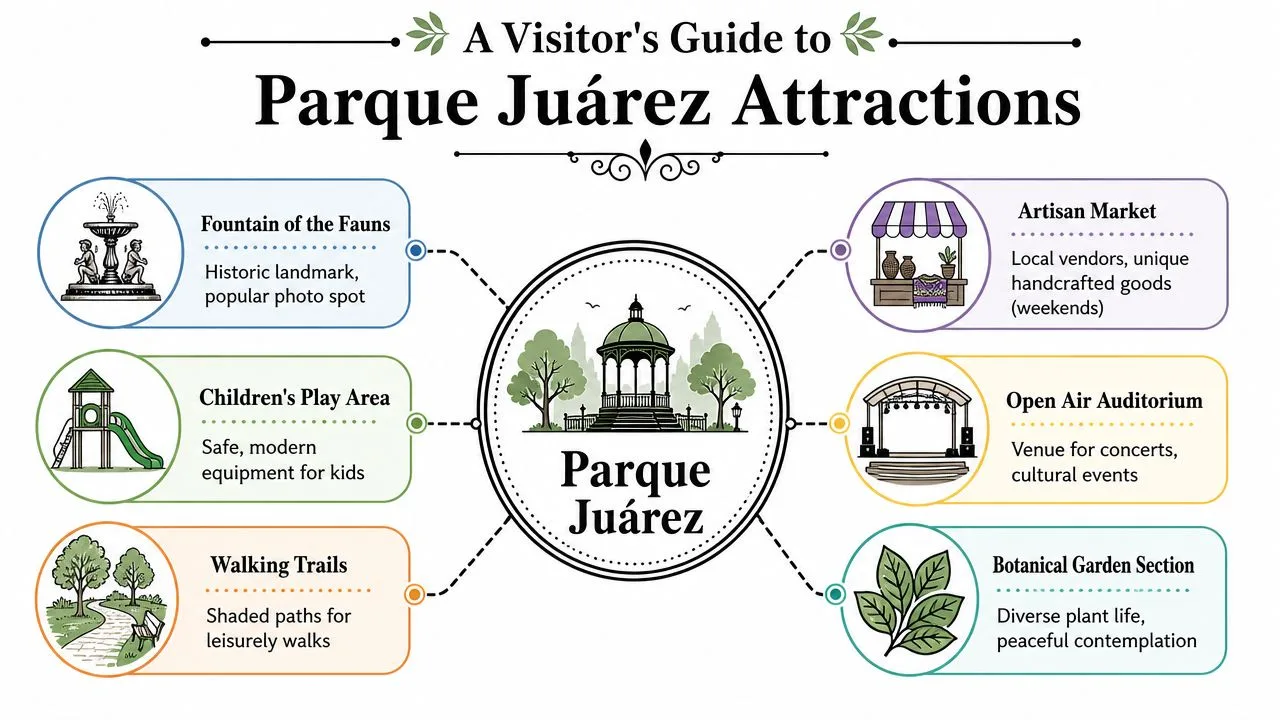
How to use the park well
Different features matter depending on whether you’re visiting, relocating, or hosting family.
- Walking paths: These are the park’s best daily asset. They make short walks feel restorative rather than transactional.
- Children’s areas: Families notice quickly whether a park supports repeat visits. Here, the answer is yes.
- Open gathering spaces: These keep the park social without making every corner feel exposed.
- Statues, fountains, and landmarks: They give the park visual memory points, which helps it feel recognizable and settled.
If you’re building a broader itinerary around the neighborhood, this local guide to what to do in San Miguel de Allende helps place the park within a full day on foot.
What stands out on a regular visit
The most valuable attractions aren’t always the most photographed ones. In practice, people use this park for routine, not spectacle. That’s a strength.
Here’s what consistently works:
| Feature | Best use | What works well | What doesn't |
|---|---|---|---|
| Shaded paths | Morning and late afternoon walks | Comfortable circulation and a calmer pace | Rushing through without noticing the side paths |
| Play areas | Children and visiting grandchildren | Makes nearby living easier for families | Expecting total seclusion nearby |
| Benches and gathering spots | Reading, conversation, short pauses | Encourages lingering without pressure to buy anything | Visiting at the busiest moment if you want quiet |
| Central open areas | Community activity and casual people-watching | Gives the park social energy | Assuming every hour has the same mood |
A few tactics make the visit better:
- Go twice in one day. Morning and late afternoon reveal different users and different sound levels.
- Walk the perimeter streets afterward. The park and its surrounding blocks should be judged together.
- Notice transitions. Good urban parks connect smoothly to homes, cafés, and side streets.
The real attraction of Parque Juárez isn’t one single feature. It’s that the park remains useful after the novelty wears off.
That’s exactly why it matters in a lifestyle decision. A striking plaza can impress you once. A functional park improves your week.
The Park’s Social Calendar Community Events and Culture
The social life of Benito Juárez Park tells you as much about San Miguel as the landscaping does. On weekends, you’ll see a wider mix of residents, visitors, families, and long-time locals moving through the same space without much friction. That blend is one of San Miguel’s best qualities when it’s working properly.
Weekend rhythm and local habits
Some parks empty out unless there’s a programmed event. This one doesn’t depend on that. It has its own neighborhood rhythm. People browse artisan offerings, children move between play and snacks, and conversations stretch longer than expected because the setting allows them to.
That’s one reason the park feels generous. You don’t have to justify being there. You can pass through for ten minutes or stay for an hour and neither feels out of place.
For readers planning a broader cultural calendar, San Miguel’s annual celebrations are worth tracking through this guide to festivals in San Miguel de Allende in 2026.
Why civic identity shows up here
The name of the park contributes to its cultural role. Benito Juárez carries unusual significance in Mexico because he was the country’s first Indigenous president, and his birthday on March 21 is a national public holiday, as noted in this background on Benito Juárez Park in Poza Rica. Parks named for him often become places where civic memory and everyday life meet.
In San Miguel, that means the park can shift naturally between leisure space and communal space. One day it’s families and dog walkers. Another day it feels more reflective, more tied to public remembrance, or more linked to the city’s shared rituals.
A healthy neighborhood park acts like a common room. People bring different purposes into it, and the space still holds together.
For buyers, this matters more than it may seem. A park with strong social use adds texture to daily life. It gives newcomers a low-pressure way to enter community life. In a relocation decision, that can matter almost as much as the house itself.
Living Beside the Green The Lifestyle of Nearby Neighborhoods
Living near Benito Juárez Park isn’t one experience. It changes block by block. The two most common lifestyle conversations are about Guadiana and the southern edge of Centro, because both benefit from the park but in different ways.
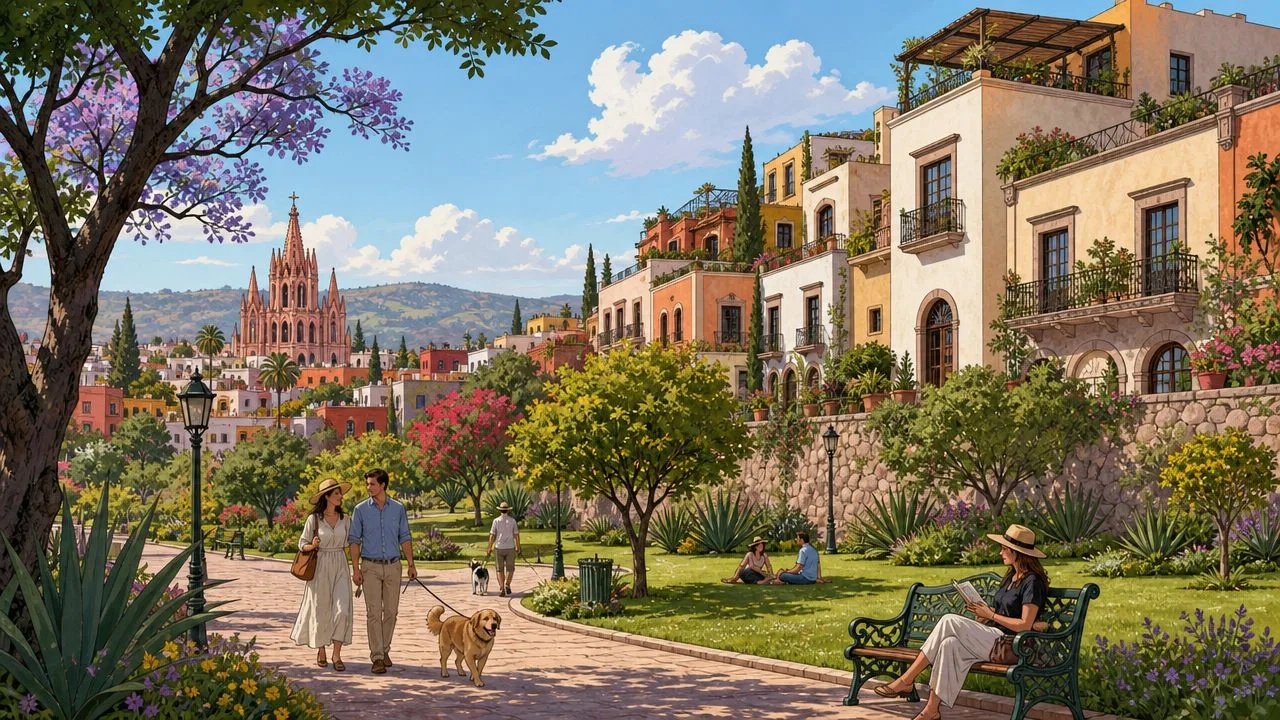
Parks in walkable, mixed-use destinations function as civic and tourism infrastructure, and their design and proximity influence circulation, public realm quality, and neighborhood value, as discussed in the Vista pocket park planning materials. In San Miguel, you feel that directly on foot. The park changes how streets connect, where people linger, and which homes feel sheltered without feeling isolated.
Guadiana versus the edge of Centro
Here’s the cleanest way to think about the lifestyle trade-off.
| Neighborhood | Vibe/Character | Typical Property Style | Walkability to Park |
|---|---|---|---|
| Guadiana | Quieter, residential, leafy | Garden homes, understated compounds, homes with more privacy | Usually direct and easy |
| Edge of Centro | More active, more urban, closer to dining and shops | Colonial homes, renovated townhouses, mixed residential styles | Very strong, often part of a daily walking loop |
If you want a useful map of the broader central district, this overview of Centro in San Miguel de Allende provides context for how the park fits into nearby living.
What buyers should notice on foot
The park influences lifestyle in ways that don’t show up in listing photos.
- Morning use: Watch who’s out early. A neighborhood with real local use feels different from one driven mainly by short-stay occupancy.
- Sound transition: Step away from the park by one or two blocks and listen. Some streets keep the calm. Others don’t.
- Street texture: Sidewalk quality, trees, parked cars, and front-door orientation all affect whether a route feels easy or irritating.
The best nearby homes usually balance three things at once. They feel connected to the park, protected from the busiest flows, and close enough to the rest of town that owners don’t start depending on cars for simple errands.
Buyers often focus on the front door view. Experienced buyers test the five-minute walk in every direction.
That’s where the distinction becomes clear. Near the park, lifestyle isn’t just about a beautiful house. It’s about whether your daily pattern becomes easier, calmer, and more enjoyable after the purchase.
How Park Proximity Affects San Miguel Real Estate Values
Homes near Benito Juárez Park tend to hold attention for good reason. In San Miguel, protected green space, walkability, and neighborhood reputation are finite assets. When a property sits close to all three, buyers usually understand the appeal quickly, even if they struggle at first to explain it.
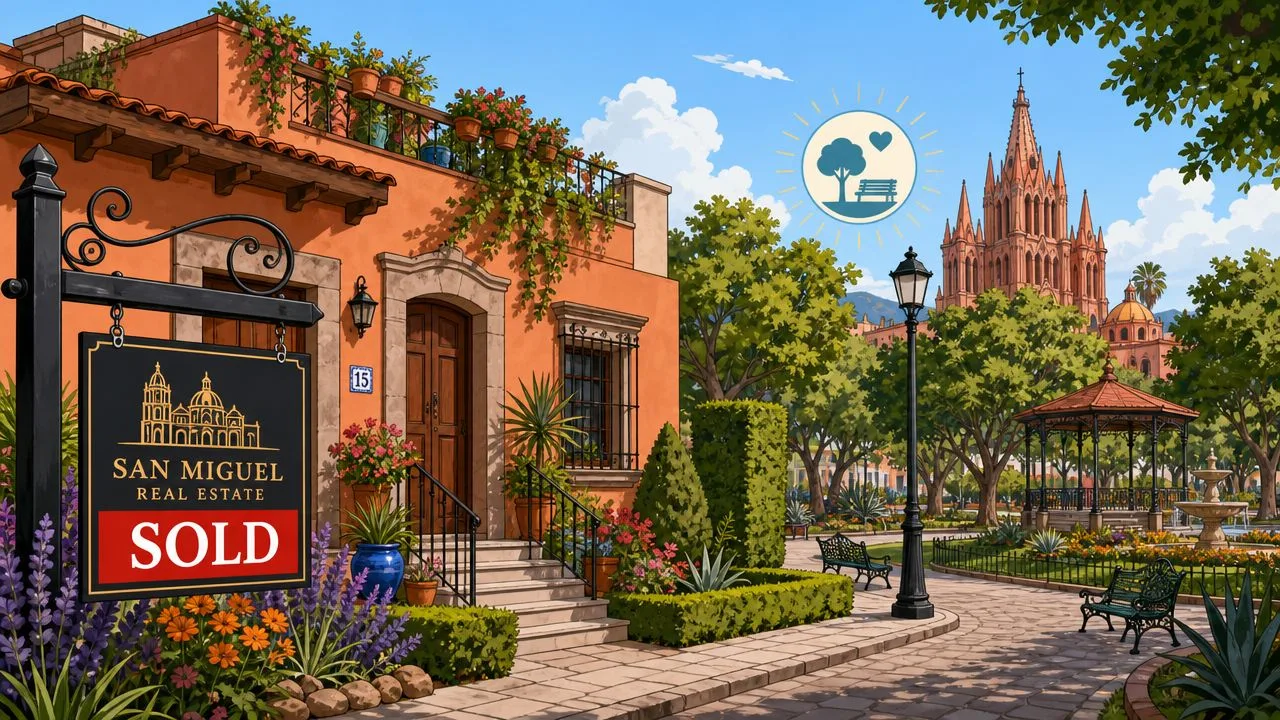
What holds value near a park
The strongest value drivers here aren’t flashy. They’re durable.
- Guaranteed access to green space: In a historic colonial city, that isn’t something every neighborhood can offer.
- Walkable daily routine: The less a resident has to organize life around driving, the more attractive the location becomes.
- Prestige by association: A respected park helps define an address in a way a single amenity never can.
- Visual relief: Trees, open sky, and setbacks create a sense of spaciousness that buyers remember.
These factors don’t work equally on every nearby home. A house can be close to the park and still underperform if the street is awkward, noisy, or disconnected. Proximity helps most when it combines with privacy, architectural quality, and an easy walking route.
What buyers often get wrong
The biggest mistake is buying by radius alone. “Near the park” sounds precise, but it isn’t. One property may sit a short walk away and feel serene. Another may be similarly close yet lose the benefit because the approach is inconvenient or the immediate block lacks charm.
I advise buyers to judge park-adjacent value using a short filter:
- Can you reach the park pleasantly on foot?
- Does the home receive the park’s lifestyle benefit without inheriting too much activity?
- Will the location still feel good after the honeymoon period?
That final question matters most. Novelty fades. Friction doesn’t.
For buyers who want strategic guidance on how lifestyle assets translate into purchase decisions, working with a local San Miguel real estate investment advisor helps separate charming narratives from durable value.
Buy the relationship to the park, not just the map pin near it.
In practice, the best properties near Benito Juárez Park offer both emotional and defensive value. They make daily life better, and they sit in a location that remains easy to understand for future buyers. That combination is hard to replicate elsewhere.
Finding Your Home Near San Miguel’s Green Heart
Benito Juárez Park matters because it brings several rare qualities together in one place. It offers beauty without stiffness, community without chaos, and a residential setting that still stays connected to the wider life of San Miguel. For many buyers, that balance is the whole point of moving here.
A home near the park isn’t just close to trees. It’s close to a better daily rhythm. Morning walks become routine. Visiting family has somewhere to gather. The city feels more navigable on foot, and the neighborhood gains a sense of depth that’s difficult to manufacture.
That’s why the park keeps surfacing in serious property searches. It isn’t just a landmark. It’s one of the clearest examples in San Miguel of how public space shapes private quality of life.
If you’re exploring homes near Benito Juárez Park, Inside San Miguel can help you evaluate not just the house, but the block, walking pattern, neighborhood fit, and long-term value of the location. In a city where lifestyle and real estate are tightly connected, that local perspective makes the search far more productive.