


You're probably doing what most buyers do at this stage. You've opened a dozen tabs, saved a few attractive listings, and started thinking that a gated home in San Miguel de Allende might solve several problems at once. Security. Cleaner streets. Easier lock-and-leave ownership. A more predictable neighborhood experience when you're splitting time between Mexico and home.
That instinct is often right. It's also where buyers get tripped up.
A gated community home can be a smart purchase in San Miguel, but the gate itself isn't the investment thesis. What matters is the specific community, the HOA culture, the access routine, the construction quality, and how the closing process works for a foreign buyer. A beautiful house in the wrong gated development can feel restrictive fast. A less flashy house in the right one can fit your life for years.
Table of Contents
- Finding Your San Miguel Haven
- Comparing San Miguel's Premier Gated Communities
- Decoding HOA Rules and Security Protocols
- Your Due Diligence Checklist for a Mexican Property
- Financing Your Purchase as an International Buyer
- Making an Offer and Closing the Deal in San Miguel
Finding Your San Miguel Haven
Many first-time buyers arrive in San Miguel with a clear emotional picture. Morning coffee on a terrace. Bell towers in the distance. A home that feels elegant, manageable, and safe when family visits or when they leave for a few months. Then they start looking at gated community homes for sale and assume the decision will come down to finishes, views, and asking price.
In practice, it usually comes down to fit.
A retired couple from the U.S. may think they want the most established golf community, then realize they care more about being able to get into Centro quickly for dinner and concerts. A part-time owner from Canada may focus on architecture first, then discover that guest access rules, contractor hours, and HOA approval procedures will shape daily life far more than a pretty listing description suggests.
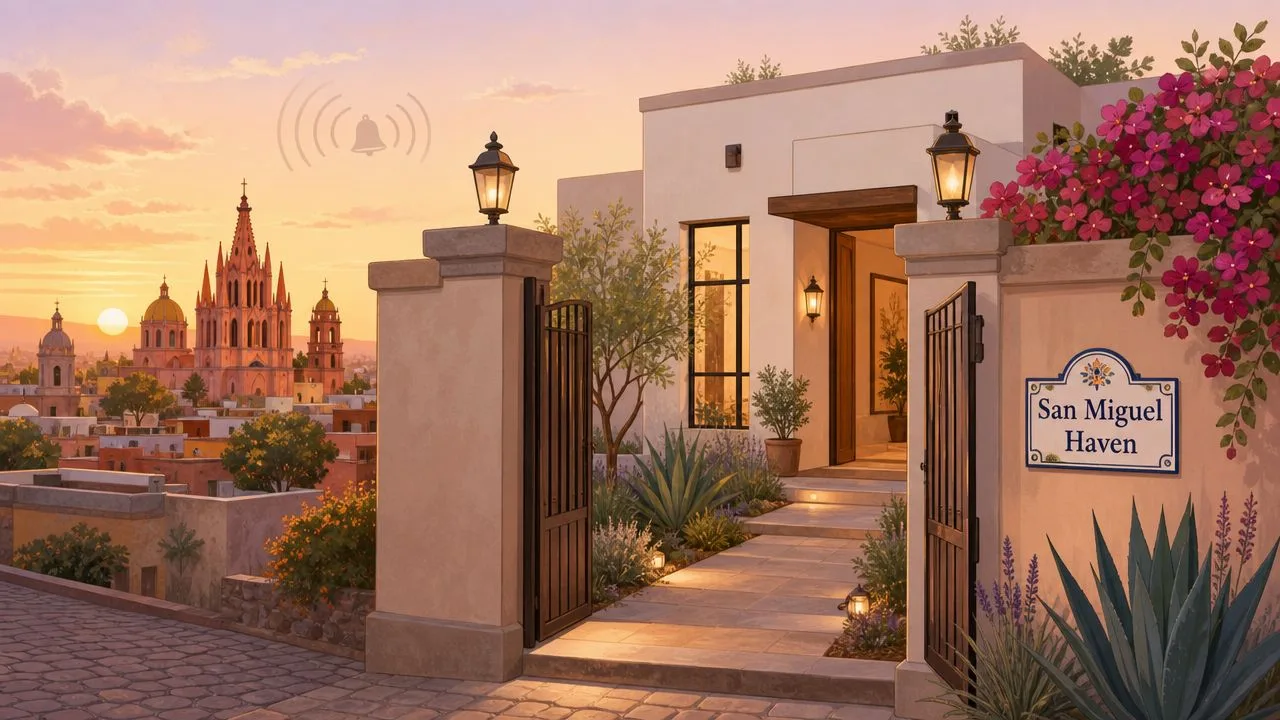
San Miguel's gated communities don't all deliver the same experience. Vista Antigua attracts buyers who want views and proximity to town. Ventanas often appeals to people who want a more resort-style setting. Club de Golf Malanquin has a more established club atmosphere that feels different from newer developments. The differences aren't cosmetic. They affect resale, rental flexibility, guest logistics, and how often you'll use the amenities you're paying for.
Practical rule: Buy the community first and the house second.
That's especially true for international buyers. The strongest purchase decisions come from seeing neighborhoods in person, driving the routes at the times you'd use them, and reviewing the community documents before you negotiate hard on a specific property. The dream works very well here. It just works best when it's grounded in the on-the-ground realities of San Miguel.
Comparing San Miguel's Premier Gated Communities
How lifestyle changes the right answer
The biggest mistake I see is buyers asking which gated community is “best.” That's the wrong question. The better question is which one fits how you'll live.
Vista Antigua usually gets attention from buyers who want a residential feel with strong views and practical access to town. If you're the kind of owner who expects to spend a lot of time in Centro, host friends for long weekends, and keep one foot in the cultural life of San Miguel, Vista Antigua often makes more sense than a community built around a club lifestyle.
Ventanas de San Miguel tends to attract buyers who want a more contained environment. Golf matters to some buyers there, but so does the broader resort-style feel. For owners who like amenities close at hand and prefer a development where the lifestyle is more self-contained, it can be a natural fit.
Malanquin feels different. It's mature, established, and more traditional in personality. Some buyers respond to that immediately. Others don't. If you want a community with a club culture and a lived-in sense of permanence, it deserves a serious look.
For buyers also considering short stays before purchasing, looking at vacation homes in San Miguel de Allende can help clarify what kind of neighborhood rhythm feels right before committing to ownership.
Community Snapshot Vista Antigua vs. Ventanas vs. Malanquin
| Feature | Vista Antigua | Ventanas de San Miguel | Club de Golf Malanquin |
|---|---|---|---|
| Overall feel | Residential, scenic, close-to-town appeal | Amenity-driven, resort-oriented atmosphere | Established club environment |
| Buyer profile | Buyers who want views plus practical access | Buyers who want lifestyle amenities inside the gates | Buyers who value tradition and community continuity |
| Architecture | Mixed custom homes and villas | Often more polished contemporary-resort presentation | Broad mix, often with a more classic country-club feel |
| Daily rhythm | Strong connection to town life | More inward-facing community use | Club-centered social life |
| Best for | Part-time owners and culture-focused residents | Amenity users and golf-adjacent buyers | Buyers who want an established membership culture |
| Main trade-off | Community feel varies by street and view position | HOA and amenity expectations need close review | Some homes need a sharper eye on updating and upkeep |
No serious buyer should compare these communities only by asking price. A landmark study found that homes inside gated communities carry a price premium of about $30,000 on average, while higher maintenance costs tied to extra amenities can reduce sale prices by approximately $19,500, which is why the essential question is how much value you place on privacy, security, and amenities versus ongoing carrying costs, as summarized by Florida Atlantic University's report on gated community pricing.
Where buyers make the wrong comparison
The wrong comparison is house versus house. The right comparison is lifestyle package versus lifestyle package.
A home in Ventanas with attractive common amenities may look stronger on a listing sheet than a quieter property in Vista Antigua. But if you don't play golf, rarely use a clubhouse, and want to get to dinner in town without feeling removed from San Miguel, you may end up paying for a lifestyle you won't use.
Malanquin raises a different issue. Buyers sometimes see an established community and assume that maturity automatically means less risk. Sometimes it means stable governance and a clear identity. Sometimes it means you need a sharper review of club expectations, renovation standards, and how a specific home has been maintained over time.
Gated living is never one feature. It's a bundle of access control, governance, amenities, maintenance standards, and neighbor expectations.
That's why I advise clients to tour at least two communities on the same day, then compare very ordinary things. How long does it take to get through the gate. How do the streets feel on foot. Are the views from the house protected, or only visible from the roof terrace. Does the community feel lively, quiet, formal, or transient. Those details decide satisfaction more than brochure language ever will.
Decoding HOA Rules and Security Protocols
The clean landscaping, controlled entry, and orderly appearance of gated community homes for sale are produced by rules. Buyers like the result, but they don't always study the machinery behind it until after closing.
That's backwards.
Industry guidance for real estate professionals says the safer path is to verify the community's rules and regulations, access procedures, and exactly what HOA dues cover, because restrictive rules or slow gate access can affect daily use and future resale liquidity, as noted in this guidance on selling homes in gated communities.
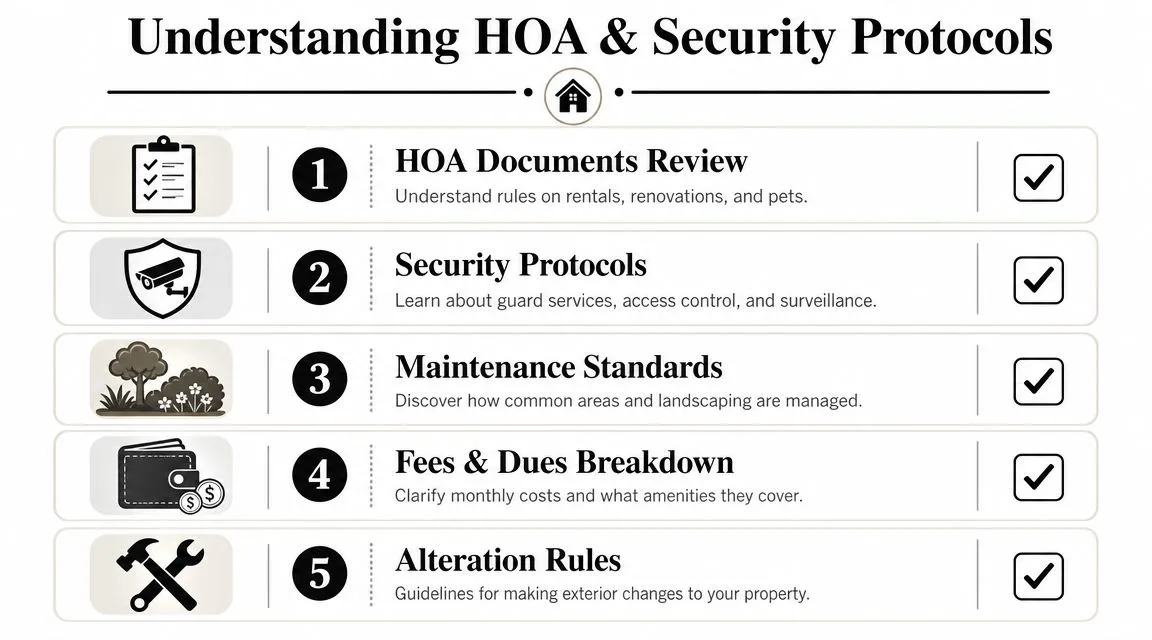
What to review before you fall in love with the house
Ask for the HOA documents early. Not after the offer is accepted. Early.
Review these points carefully:
- Rental rules: Some communities are comfortable with short stays. Others discourage or restrict them. If you think you may rent the home occasionally, this is not a side issue.
- Pet policies: Weight limits, leash rules, and the number of animals allowed can matter more than buyers expect.
- Exterior changes: Paint colors, solar panels, rooftop additions, railings, pergolas, landscaping, and even window replacements may need approval.
- What dues cover: Security, common area landscaping, road maintenance, lighting, trash handling, and amenity upkeep should be spelled out clearly.
- Special assessments and reserves: If roads, gates, drainage, or common buildings need work, owners may face additional obligations.
In San Miguel, buyers also need to ask how the community handles water systems, service access, and contractor entry. A house may be beautiful, but if every repair visit involves cumbersome entry approvals or narrow work hours, ownership becomes less convenient than expected.
For readers comparing neighborhood safety and daily feel more broadly, this overview of whether San Miguel de Allende is safe gives useful context alongside community-level security questions.
How gate access affects daily life
Security is only helpful if it works smoothly.
Ask how guests enter. Ask how deliveries are handled. Ask what happens when you have a plumber, painter, or appliance technician arriving while you're out. Some communities make this easy with well-run guard procedures and resident notifications. Others create friction that wears on owners and discourages showings when it's time to sell.
A secure gate is an asset. A slow gate with confusing procedures becomes a tax on daily life.
I also tell buyers to test the routine personally. Arrive as a guest. Call in a visitor. Drive in at a busier hour. The answers on paper matter, but the lived experience matters more. If the community's processes feel cumbersome during a short visit, they won't feel easier after you own there.
Your Due Diligence Checklist for a Mexican Property
Buying in San Miguel is straightforward when the file is clean and the process is handled correctly. It's not identical to the U.S. or Canada, and buyers are much better served when they accept that early rather than trying to force a foreign template onto a Mexican transaction.
One common buyer frustration starts before legal review. Listing pages often leave out recurring ownership details. A major challenge for buyers is understanding the true ownership costs, because listings frequently omit HOA dues, special assessments, and other recurring obligations, which is why due diligence should focus on uncovering the total cost of ownership, as highlighted by this Redfin discussion of gated-community search gaps.
The local checks that matter in San Miguel
A solid inspection in San Miguel should go beyond walls and appliances. Local homes often have systems and conditions that foreign buyers aren't used to evaluating on their own.
Focus on items like these:
Water infrastructure
Confirm how the property handles water storage and delivery. Ask about cisterns, pumps, pressure consistency, filtration, and backup systems.Roofs and terraces
Flat roofs and outdoor living areas need close review for drainage, waterproofing, and signs of deferred maintenance.Foundation and movement
San Miguel has varied terrain. Cracks are not all equal. Some are cosmetic. Some deserve deeper review by the right professional.Electrical and mechanical systems
Verify the age, condition, and capacity of the systems you'll depend on, especially if you expect full-time use.HOA-side responsibilities
In a gated development, determine which repairs belong to the owner and which fall to the association. Don't assume.
Understanding the notario and title process
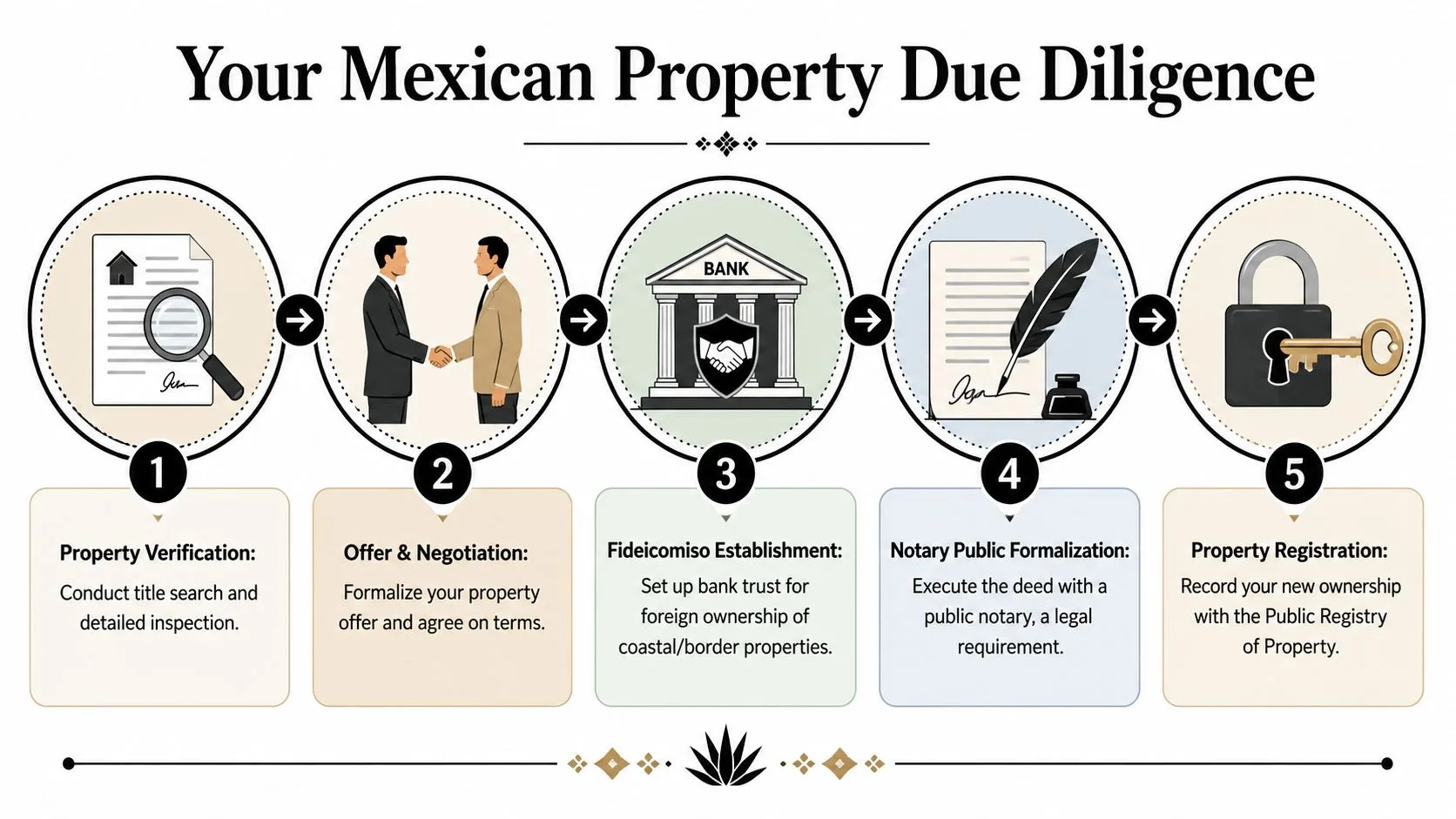
The Notario Público is central to the closing process in Mexico. This isn't just someone acknowledging signatures. The notario is a government-appointed legal professional who formalizes the deed, reviews the legality of the transfer, and confirms the transaction meets legal requirements.
San Miguel also offers an important practical advantage for many foreign buyers. Because it is not in the restricted coastal or border zone, foreign buyers generally don't need a fideicomiso solely because they are foreign. That simplifies ownership compared with purchases in some beach markets.
A basic due diligence file should include:
- Title review: Confirm who owns the property and whether any liens, encumbrances, or unresolved legal issues appear in the record.
- Seller authority: If the seller is acting through a representative, verify the power and scope of that authority.
- Property status: Match the legal description to the physical reality on the ground, including boundaries and improvements.
- Tax and utility standing: Confirm the relevant payments and records are current.
- Community compliance: Make sure the property is in good standing with the HOA or equivalent administration.
If a buyer tells me, “The house looks perfect, so let's move fast,” my answer is simple. Move efficiently, not casually.
That distinction protects you. Good due diligence doesn't slow a strong purchase. It prevents expensive surprises after closing.
Financing Your Purchase as an International Buyer
Financing is where many international buyers need to reset expectations. In San Miguel, many gated-home purchases are structured around liquidity the buyer already controls, rather than relying on a conventional local mortgage approval process.

Cash, cross-border planning, and local reality
Cash is common because it's simple, competitive, and easier to coordinate across borders. That doesn't mean every buyer arrives with idle cash. Often, they create cash through planning done in their home country. Some use equity from another property. Others rely on portfolio-based lending or other asset-backed strategies arranged outside Mexico.
The practical point is this: your financing plan needs to fit the transaction calendar in Mexico, not just your balance sheet.
If you need financing, start with the source that is most familiar with your income, credit history, and assets. For many U.S. buyers, that's not a Mexican bank. It's an existing banking relationship at home. Buyers who want a broader overview of ownership logistics can review this guide to buying property in Mexico as an American.
What doesn't work well is waiting until you've found the perfect house to start thinking about liquidity. Sellers in San Miguel often respond best to buyers who can show a clean path to funds, a realistic deposit structure, and a closing timeline that doesn't depend on uncertain approvals.
Managing currency and closing funds
Many San Miguel properties are marketed in U.S. dollars because that's practical for an international audience. The legal closing mechanics, however, still require attention to peso-denominated documentation and timing.
That creates two planning issues.
First, buyers should decide early how they want to handle exchange timing. If you wait until the last moment, you give yourself fewer options and more stress. Second, you need clean coordination among your bank, your agent, the notario's office, and any legal representative handling paperwork or fund instructions.
Here's a useful overview before you get deep into transfer planning:
I encourage buyers to think about currency management as part of risk control, not as a side task. The goal isn't to outsmart the market. It's to avoid a rushed transfer, a documentation mismatch, or a funding delay that puts pressure on closing.
A practical financing discussion should include:
- Source of funds: Know exactly where closing money will come from, and when it becomes available.
- Transfer logistics: Confirm what documentation the receiving parties will need and how long your institution typically takes.
- Closing calendar: Build around business-day realities, not ideal scenarios.
- Reserve liquidity: Keep room for closing costs, setup expenses, and immediate post-closing work.
Making an Offer and Closing the Deal in San Miguel
Structuring the offer
Once you've chosen the property, the transaction gets much more specific. In San Miguel, a good offer isn't just a price. It should also state payment terms, deposit timing, personal property if applicable, proposed closing timing, and any conditions tied to due diligence or document review.
Clarity matters more than theatrics. A clean offer with realistic terms often performs better than an aggressive one that leaves practical questions unanswered.
This is also the stage where I want buyers to stop relying on verbal assumptions. The purchase-sale agreement should be clear, preferably bilingual if that helps the parties, and consistent with what the notario and legal team will later need to formalize. If you're evaluating professional support during the transaction, an experienced real estate investment advisor can help coordinate negotiation, document flow, and local timing.
What closing day really looks like
Closing in San Miguel usually feels more formal than many foreign buyers expect, and that's a good thing. The notario's office reviews the file, the deed is executed, required payments are made, and the transfer is formalized through the proper legal channel.
Before closing day, buyers should confirm:
- Identity and authority documents: Make sure names, passport details, and any powers of attorney match exactly across the file.
- Final funds path: Don't leave transfer timing to chance.
- Property condition agreements: Confirm what must be completed before possession.
- HOA status: Verify the seller's standing and any required notices to the community administration.
Negotiation style in San Miguel is usually more productive when it stays calm and documented. Buyers who do well here don't confuse speed with pressure. They stay organized, ask for the right records, and keep everyone aligned on dates, funds, and signatures.
The smoothest closings aren't the fastest ones. They're the ones where nothing important was left vague.
After the deed is signed and the closing funds are in place, the handoff becomes straightforward. Keys, access devices, entry procedures, utility transitions, and HOA onboarding should all be handled with the same care as the legal paperwork. In a gated community, that final step matters because ownership doesn't begin at the front door. It begins at the gate.
If you're looking at gated community homes for sale in San Miguel de Allende and want practical guidance on neighborhoods, HOA review, due diligence, and closing logistics, Inside San Miguel offers property search support and transaction guidance suited for international buyers.