

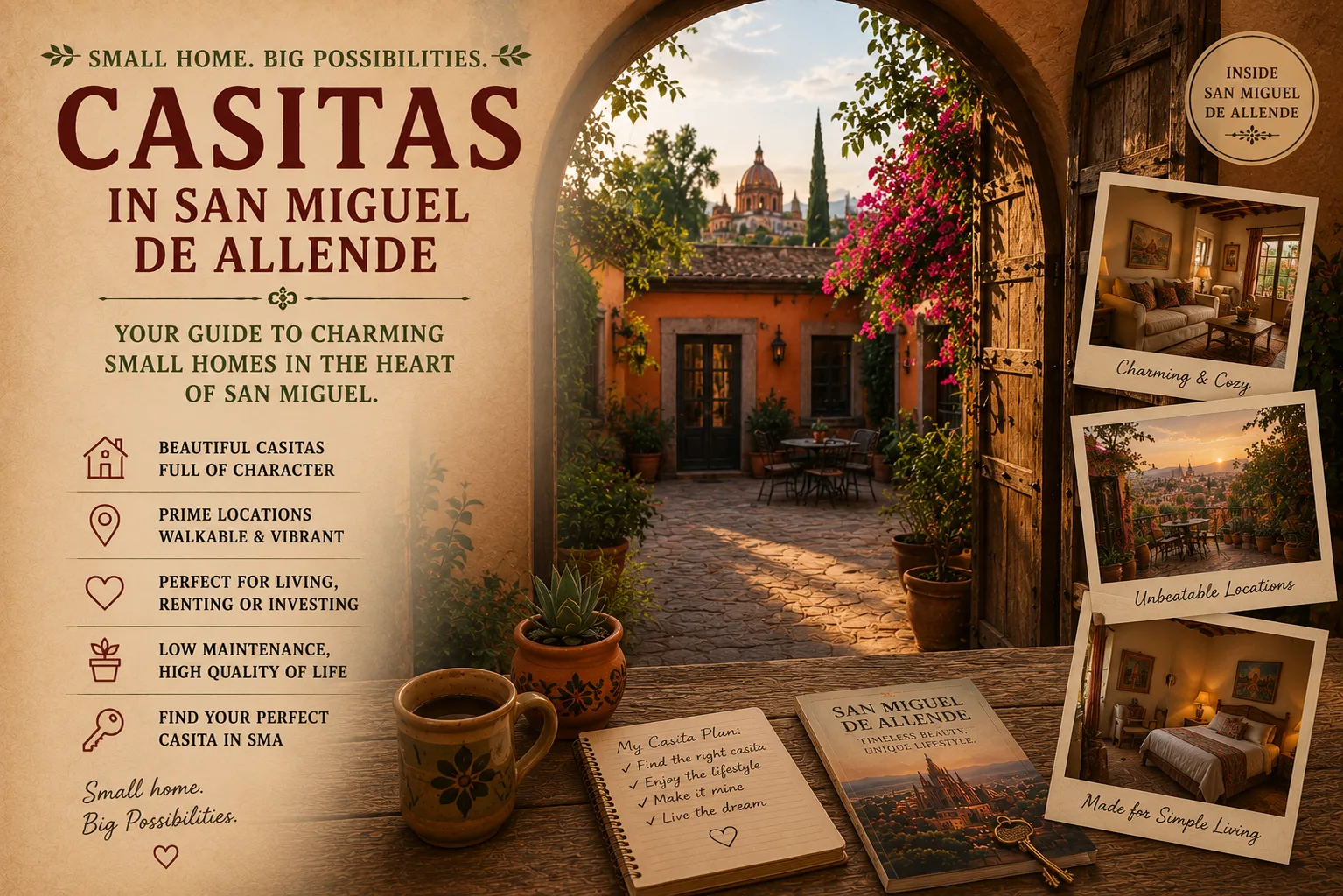
You're probably doing what most serious buyers do at the start. You've saved a handful of listings, fallen for the stone walls, courtyards, and rooftop views, and told yourself a casita in San Miguel de Allende could be the right mix of lifestyle and investment.
You're also probably missing the part that matters most.
A casita here isn't just a charming small home in a pretty town. It's a property inside a historic city with old titles, uneven maintenance histories, preservation issues, and real ownership due diligence that too many international buyers gloss over. If you buy only with your eyes, you can end up with a beautiful problem.
Buy with discipline instead. San Miguel rewards buyers who understand what a casita is, where it works best, what it really costs to own, and which legal steps are essential.
Table of Contents
- The Allure of the San Miguel de Allende Casita
- What Defines a Casita in San Miguel de Allende
- A Guide to Casita Neighborhoods
- Understanding Prices and Market Trends for 2026
- The Indoor-Outdoor Lifestyle of a San Miguel Casita
- How International Buyers Can Purchase a Casita
- Critical Legal Steps and Due Diligence
- Why You Need a Boutique Advisor for Your Search
The Allure of the San Miguel de Allende Casita
The appeal is easy to understand. You walk a few cobblestone blocks, hear church bells in the distance, pass a cafe you'd return to, and then step through a wooden door into a quiet courtyard that feels hidden from the street. That moment sells San Miguel better than any brochure.
A casita gives you access to that feeling in a form that often feels more personal than a large estate. You're not buying anonymous square footage. You're buying daily life at a human scale. Morning coffee in a tiled patio. Dinner on a terraza. A guest suite that works for visiting family or a paying renter. A neighborhood where you can walk somewhere worth going.
That's why buyers searching for Casitas San Miguel de Allende usually aren't looking for a generic second home. They want a base inside a city that still feels rooted in craft, architecture, and community.
Buy the casita if you want to live in San Miguel. Don't buy it if you only want to own something in San Miguel.
The mistake I see most often is romanticizing the category. A beautiful facade can distract you from the practical questions that determine whether the property works. Is the title clean? Does the layout support guests without compromising privacy? Will the upkeep of an older house fit your budget and tolerance?
The dream is real. So is the homework.
What Defines a Casita in San Miguel de Allende
It starts with history, not square footage
In San Miguel, a casita isn't defined by a universal size standard. It's defined by context. San Miguel de Allende's origins date to 1542, and the city's small homes sit inside a colonial urban fabric shaped over nearly five centuries, which is why casitas here usually mean compact homes in historic neighborhoods rather than suburban starter houses, as noted in this historical background on San Miguel de Allende.
That history matters in real estate terms. It explains scarcity. It explains why small properties in central areas attract outsized attention. It also explains why layout and character often matter more than raw scale.
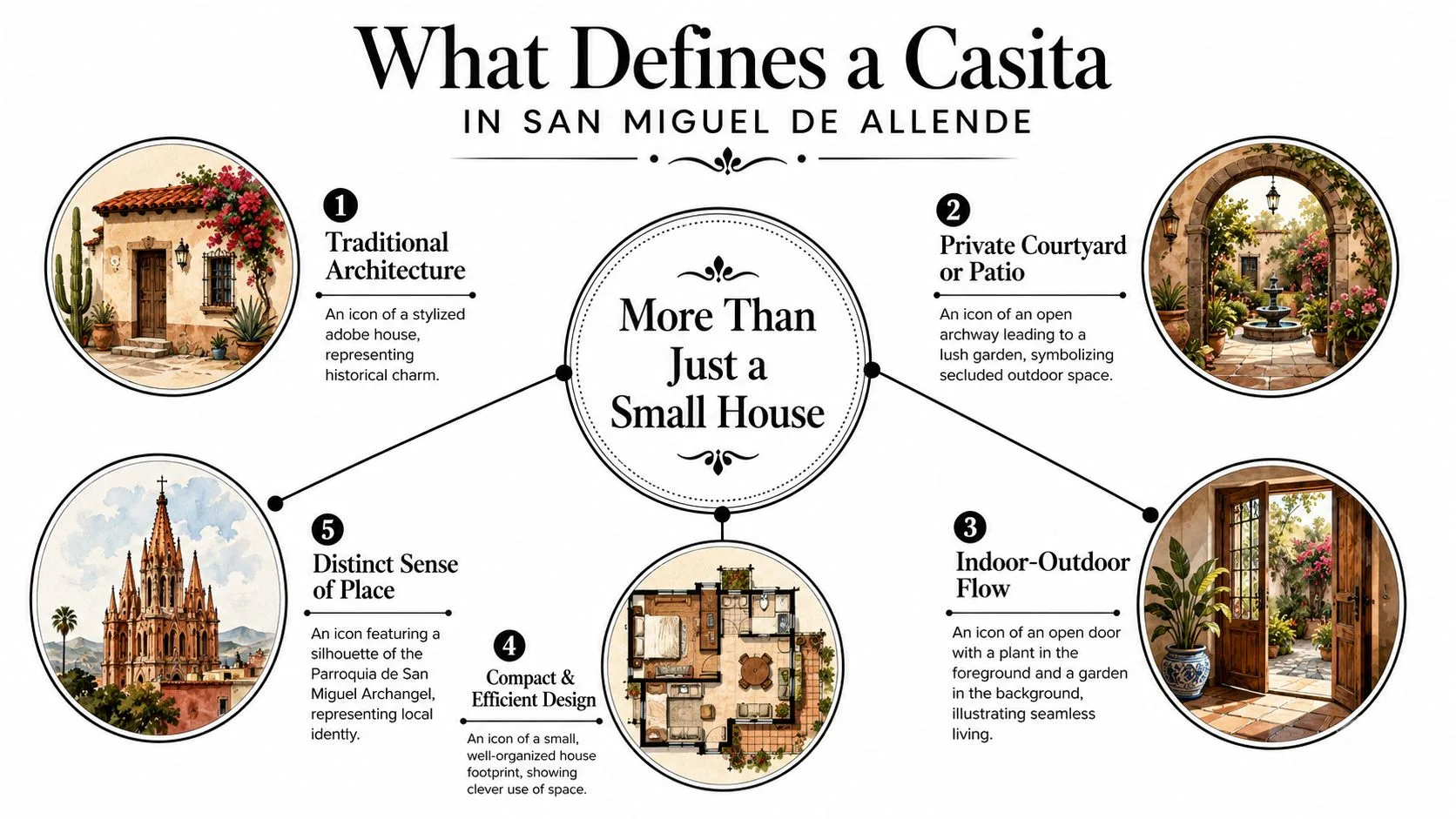
A proper casita here usually includes several of these traits:
- Historic setting: It's often located in or near established neighborhoods with a strong architectural identity.
- Private outdoor space: A patio, courtyard, or garden isn't a bonus. It's often central to how the home functions.
- Efficient layout: Good casitas use space intelligently instead of shrinking a standard house plan.
- Strong local identity: Materials, rooflines, doors, tilework, and proportions tend to feel tied to San Miguel, not imported from a generic resort template.
The market uses the word loosely, but the pattern is clear
The label can cover more than one property type. Some casitas are standalone homes. Some are guesthouses attached to larger residences. Others operate as small compounds. A good example is the recurring pattern of three-unit or independent-house layouts in central inventory. Tripadvisor describes “Tres Casitas Bonitas” as three individually decorated casitas in a Mexican period building at Calle Relox #100, and another listing titled “TRES CASITAS” markets three independent houses with outdoor space, garden, and parking, as shown in this Tripadvisor listing reference.
That tells you something important. In this market, “casita” often signals flexibility of use as much as size.
Practical rule: If a casita can serve as a private residence, guesthouse setup, or income-producing compound, it deserves a closer look.
Another example points to the interior planning buyers should value. A featured property shows a 554 m² house with 4 bedrooms, 4.5 baths, and 2-car parking, which suggests a low-density single-family layout built for privacy, multi-zone living, and guest use rather than apartment-style compression, according to this casita feature listing.
That's the right way to think about the category. Not small versus large. Useful versus limiting.
A Guide to Casita Neighborhoods
Neighborhood choice shapes your experience more than almost anything else. Two homes with similar charm can feel completely different depending on whether you want flat walkability, quieter streets, hillside views, or easier parking.
How the main neighborhoods differ
Centro is the emotional bullseye. If you want historic immersion, immediate access to landmarks, restaurants, and daily walking, Centro delivers. You'll also deal with tighter streets, more activity, and stronger competition for attractive small homes. Casitas here tend to win on atmosphere and lose on ease.
San Antonio is one of the smartest choices for many international buyers. It feels lived-in, mixed, and practical. You can still walk into the center, but the neighborhood often offers a bit more breathing room. I like San Antonio for buyers who want a balanced full-time lifestyle rather than a postcard address.
Guadiana usually appeals to people who want a greener, calmer setting without feeling disconnected. Casitas here often suit buyers who care about residential comfort first and nightlife second.
Ojo de Agua draws buyers who want views and a more refined atmosphere. Some pockets are excellent. Others are better for people comfortable with hills and less casual walking.
Balcones and Atascadero tend to work for buyers who prioritize space, outlook, and a more residential environment. These areas can make sense if you don't need to step out your front door into the center every day.
Gated communities are a separate category. They appeal to buyers who want controlled access, easier parking, and newer planning logic. If that's your preference, review current gated community homes for sale in San Miguel de Allende and compare them against what you'd gain, and lose, by leaving the historic core.
San Miguel de Allende neighborhood comparison for casita buyers
| Neighborhood | Vibe | Typical Casita Style | Price Point | Best For |
|---|---|---|---|---|
| Centro | Historic, lively, walkable | Colonial, courtyard-focused, character-heavy | Premium | Buyers who want the classic San Miguel experience |
| San Antonio | Mixed, practical, community-oriented | Renovated casitas, flexible live-rent setups | Mid to upper | Full-time residents, long-stay owners |
| Guadiana | Quiet, leafy, residential | Comfortable homes with gardens and calmer streets | Upper | Buyers prioritizing peace and everyday livability |
| Ojo de Agua | Elevated, scenic, residential | View-oriented homes, terraces, layered layouts | Upper | Buyers who value views and privacy |
| Balcones | Residential, spread out | Larger-format homes and hillside properties | Upper | Owners who want more space and don't mind driving |
| Atascadero | Established, quieter, residential | Casas and casitas with larger lots or compound feel | Upper | Multi-generational use, longer stays, privacy |
| Gated communities | Controlled, organized, lower-friction | Newer or planned layouts with easier parking | Varies | Buyers who want convenience and structure |
If you're unsure, don't start with price. Start with how you'll live. The wrong neighborhood will irritate you every week. The right one will make a smaller house feel perfect.
Understanding Prices and Market Trends for 2026
You find a casita online at a price that looks reasonable for San Miguel. The photos are polished. The courtyard is charming. Then you review the title history, unpaid obligations, insurance, repairs, and annual carrying costs, and the deal changes completely.
That is the 2026 market. Buyers are not overpaying only because they misread asking prices. They get into trouble because they fail to price the risk attached to older small homes.
What ownership costs buyers tend to miss
Insurance is one of the first reality checks. Inside San Miguel's local market coverage notes that premiums for small guesthouses in San Miguel vary widely depending on age, condition, and risk factors. Two casitas with similar listing photos can have very different annual ownership costs.
Older homes create the biggest spread. A casita with patched wiring, inconsistent water pressure, roof repairs done in stages, or unresolved moisture issues will cost more to insure, more to maintain, and more to correct after closing.
Maintenance reserves matter here. Colonial and older properties often need recurring work on roofs, drainage, plaster, stone, carpentry, and exterior finishes. Small houses are not always cheap houses. In San Miguel, a compact footprint can still hide expensive deferred work.
Hidden liabilities matter just as much as physical condition. Before you focus on finishes, confirm there are no unpaid predial balances, utility disputes, HOA obligations, inheritance complications, or liens recorded against the property. International buyers skip this step too often, especially when a seller presents the home as a simple pied-a-terre purchase.
A lower entry price means very little if you inherit legal or maintenance problems the seller failed to resolve.
True ownership cost also includes how you plan to use the home. If you want part-time personal use with occasional rental income, study seasonal demand, service staffing, and guest expectations. Buyers drawn to weekend stays near San Miguel de Allende hot springs and wellness outings often assume light rental activity will offset costs. That only works if the property has the right access, systems, management plan, and legal paperwork.
What I'd prioritize when comparing listings
I would rank casitas by risk control first, charm second.
- Clean ownership trail: Confirm who owns the property, how title is held, whether the seller has full authority to sell, and whether any liens, claims, or probate issues exist.
- Core systems condition: Check electrical, plumbing, drainage, roof integrity, water storage, filtration, and repair history.
- Operating reality: Ask for utility bills, tax records, insurance information, maintenance invoices, and any staff or service costs.
- Street and access quality: Noise, parking, slope, delivery access, and ease of entry affect resale and rental performance more than buyers expect.
- Outdoor space that functions well: A patio adds value only if it has privacy, drainage, shade, and comfortable year-round use.
- Exit strength: Buy the casita that another cautious buyer will trust in three to five years, not the one that photographs best today.
If you want a disciplined purchase, ask for documents early and verify them independently. In this market, the best deal is usually the casita with fewer surprises, not the one with the prettiest tile.
The Indoor-Outdoor Lifestyle of a San Miguel Casita
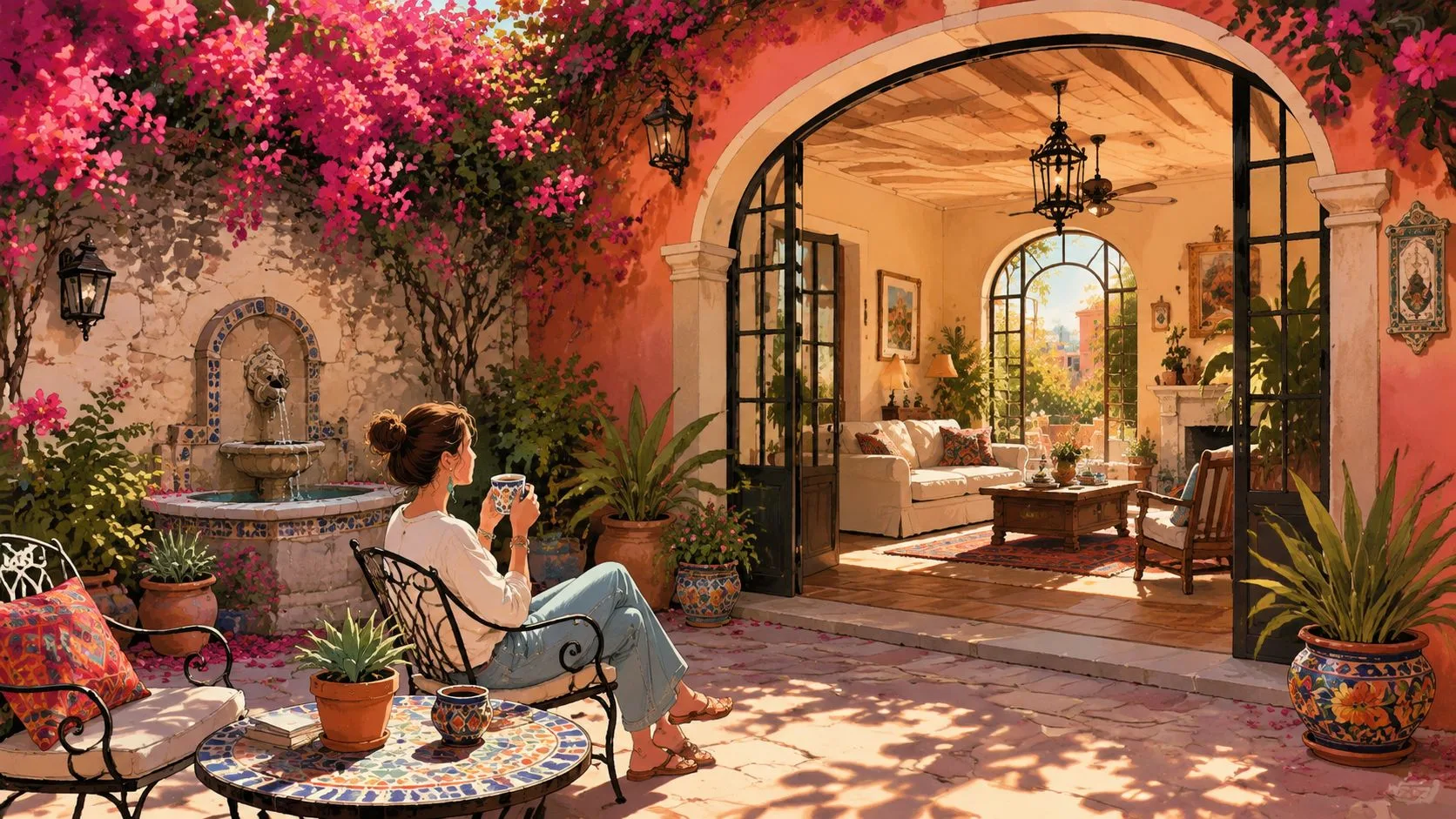
The best casitas in San Miguel don't feel small because they borrow space from the outdoors. A good courtyard, garden, or terraza changes how the house lives.
Why the courtyard matters more than the living room
This isn't just aesthetic. Casitas in San Miguel often rely on courtyard and garden-oriented microclimates, with listings emphasizing gardens, outdoor entertainment areas, firepits, fan-based cooling, purified filtered water, and equipped kitchens rather than central air, as seen in this Expedia casita listing overview.
That tells you how these homes are meant to work. The climate and design logic favor airflow, shade, enclosed outdoor living, and localized systems. Buyers who insist on evaluating a casita by North American suburban standards often miss the point.
A great San Miguel casita lets you move naturally between interior rooms and sheltered exterior space. Breakfast outside. Reading in a shaded patio. Guests having a drink near a firepit after sunset. The architecture does part of the comfort work for you.
Daily life is local and walkable
The lifestyle isn't confined to the property. It extends into the neighborhood. Being able to walk to cafes, mercados, galleries, and dinner matters more here than it does in many second-home markets.
Some buyers also build wellness routines around the town and its surroundings. If that's part of your plan, local outings like the hot springs near San Miguel de Allende can become part of the rhythm of ownership, especially for longer stays.
The right casita doesn't isolate you from San Miguel. It plugs you into it, then gives you a quiet place to return to.
When you tour, spend time in the courtyard before you decide anything. Sit there. Listen. Check the light, the breeze, the privacy, and the noise. That space often tells you more than the staged living room.
How International Buyers Can Purchase a Casita
For foreign buyers, San Miguel is more straightforward than many people expect. Because it's in Mexico's interior, buyers can hold direct title here. You don't have the coastal trust structure that applies in restricted zones near borders and coastlines.
That's an advantage, but simplicity doesn't mean speed or informality. You still need a disciplined process.
The basic path
A typical purchase usually follows this order:
Define your buying criteria
Decide whether this is a full-time home, part-time residence, rental property, or a hybrid. Your use case should shape neighborhood and layout choices.Tour and shortlist intelligently
Don't tour twenty random homes. Compare a focused set that reflects your actual priorities.Make an offer
Once you identify the right property, your advisor or attorney can help structure the offer terms, deposits, and key contingencies.Open the legal and notarial process
The notario público has a formal role in the transaction. This isn't optional paperwork. It's central to transferring ownership properly.Complete closing requirements
That includes identity documentation, funds transfer planning, and whatever supporting records the closing process requires.
What to prepare before you make an offer
Before you get emotionally attached, line up these basics:
- Proof of funds or financing plan: Cash buyers should be ready to document source and timing of funds.
- Identity documents: Keep your passport and supporting documentation current and easy to produce.
- Tax and closing guidance: Ask early how your ownership structure and future sale could affect taxes.
- Local legal support: Don't wait until after the offer to find competent counsel.
The process itself isn't mysterious. The risk comes from buyers assuming that because foreigners can buy directly, the details can be handled casually. They can't.
Critical Legal Steps and Due Diligence
Buyers either protect themselves or create future pain.
Older casitas often come with more ownership history than newer homes. That can mean a longer paper trail, inherited interests, missing updates, old tax issues, or encumbrances that don't show up in glossy marketing. If you skip due diligence because the house is beautiful or the seller seems trustworthy, you're making a basic error.
The documents that are not optional
Recent 2025-2026 data from the Public Property Registry of Guanajuato shows that 35% of disputed small-property transactions in the region stem from hidden tax liens or unregistered inheritance claims, which makes a certificado de libertad de gravamen and a 10-20 year ownership history review essential for international buyers, according to Inside San Miguel's guide to buying property in Mexico as an American.
That statistic should reset your standards immediately.
The certificado de libertad de gravamen is the lien-free certificate. Ask for it. Review it. Make sure your legal team confirms what it covers and whether anything else needs to be checked at the registry level.
The ownership history review matters because many problems don't appear as a simple current lien. Inheritance disputes, unregistered transfers, or unresolved claims can sit behind the current seller's story.
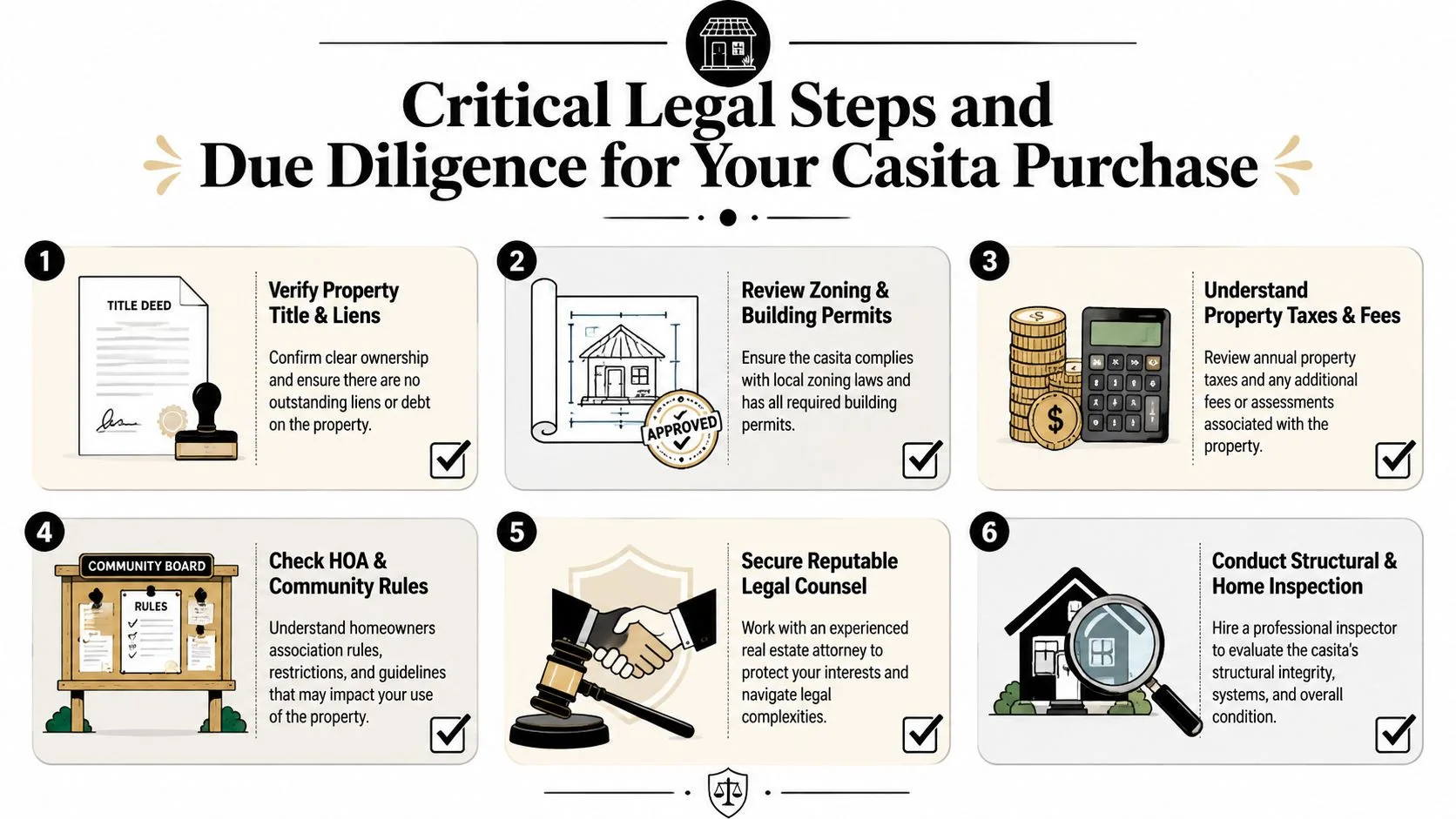
The due diligence checklist I insist on
I'd treat these as mandatory for a casita purchase:
- Registry verification: Confirm current ownership, liens, and recorded encumbrances.
- Predial review: Make sure property taxes are paid and documented.
- Ownership chain check: Review the title history thoroughly enough to catch inheritance or transfer disputes.
- Permit and construction review: Confirm what was built, added, or altered, especially in older homes.
- Inspection and systems review: Don't let charm substitute for a structural and functional review.
- Rules and restrictions: If the property is in a managed development or shared setting, verify operational limits.
If a seller resists document requests, slow down. Serious buyers should read that as a warning, not a challenge.
You also want an attorney who can work comfortably with foreign buyers and explain findings in plain language. Legal due diligence should reduce uncertainty, not bury you in vague reassurances.
Why You Need a Boutique Advisor for Your Search
You fly in for a four-day buying trip, tour eight charming casitas, and fall for the one with the perfect courtyard and rooftop view. Then critical questions start. Is the asking price supported by the street, not just the staging? Are the carrying costs still sensible after insurance, maintenance, staff, and closing expenses? Is there a title issue waiting behind a polished sales pitch? A boutique advisor helps you answer those questions before you get emotionally attached.
San Miguel rewards buyers who get specific. Street by street, block by block, the buying experience changes. One home has strong rental appeal but poor parking. Another looks turnkey but will need expensive systems work within a year. A third sits in a beautiful pocket of town but comes with ownership complications that a casual search will miss.
Boutique advisors improve decisions, not just access
A general agent can show property. A boutique advisor should narrow risk, test your assumptions, and keep you focused on fit, cost, and legal clarity.
That matters even more for international buyers, because you are making several decisions at once. You are choosing a neighborhood, a use case, a cost structure, and a legal position. Treat those as one package.
A brief example. A casita that feels like a bargain in Centro may stop looking attractive once you account for traffic noise, limited vehicle access, rooftop waterproofing, and higher upkeep tied to an older home. The wrong advisor helps you fall in love with the photos. The right one makes you compare the full ownership picture.
Some buyers use San Miguel real estate investment advisory support when they want a more targeted search and better coordination around due diligence.
What good representation should do
A strong advisor should help you do four things well:
- Cut bad inventory fast: Stop touring homes that miss your real budget, use case, or tolerance for upkeep.
- Explain block-level tradeoffs: Noise, grade, walkability, parking, service access, and resale appeal should be discussed clearly.
- Coordinate specialists around facts: Your attorney, notario, inspector, and contractor should be working from the same documents and the same concerns.
- Negotiate with evidence: Price should reflect condition, document quality, deferred maintenance, and operating reality.
A common pitfall in searches arises. Buyers focus on charm first and costs later. In San Miguel, that order is expensive.
The right casita should still make sense after closing costs, the first repairs, the first tax cycle, and the first full year of ownership. A boutique advisor helps you buy with clear eyes. That is the difference between a beautiful purchase and a costly lesson.